

Introduction
School certification for student loans is the process in which a college or university verifies a student’s enrollment, confirms their Cost of Attendance (COA), and certifies the loan amount before funds are released by the lender. This verification is required for nearly all federal student loans and most private student loans to ensure students borrow only the amount they are eligible to receive. Without student loan school certification, lenders generally cannot disburse loan funds, even if the loan has been approved. In this guide, you’ll learn how the school certification process works, why it’s important, how long it usually takes, what can delay it, and the best ways to speed it up.
What Is School Certification for Student Loans?
School certification for student loans is the verification process in which a college or university confirms a student’s enrollment, academic program, Cost of Attendance (COA), and eligibility before a lender releases loan funds. This process ensures that the requested loan amount does not exceed the student’s eligible education expenses after considering other financial aid. Most federal student loans, Parent PLUS Loans, Graduate PLUS Loans, and many private student loans require school certification before disbursement. It is important to understand that school certification is different from loan approval—a lender may approve your application, but the loan cannot be disbursed until your school completes the certification process.
Why Is School Certification Important?
The school certification process protects both students and lenders by confirming that the loan meets federal regulations and school policies. It helps prevent borrowing more than necessary, ensures financial aid is calculated correctly, and verifies that the student is eligible to receive loan funds. Completing this step accurately also reduces delays in student loan disbursement and helps schools coordinate all sources of financial aid.
Confirms Student Enrollment
Before certifying a loan, the school verifies that the student is enrolled in an eligible degree or certificate program and meets the institution’s enrollment requirements. This confirmation helps lenders ensure that loan funds are being used for qualified educational purposes.
Verifies the Loan Amount
The school reviews the amount requested by the borrower and compares it with the student’s remaining educational expenses after grants, scholarships, and other financial aid have been applied. If necessary, the school may reduce the requested amount to comply with financial aid regulations.
Prevents Over-Borrowing
One purpose of student loan school certification is to prevent students from borrowing more than they are eligible to receive. Schools calculate the student’s remaining financial need and certify only the amount allowed under federal regulations or lender policies.
Confirms the Cost of Attendance (COA)
During certification, the school verifies the student’s Cost of Attendance, which includes expenses such as tuition, mandatory fees, housing, meals, books, supplies, transportation, and other approved education-related costs. This calculation helps determine the maximum loan amount the student can receive.
Protects Students and Lenders
The certification process creates an additional layer of verification that benefits both borrowers and lenders. It confirms that the loan is being issued for legitimate educational expenses while reducing the risk of errors, fraud, duplicate funding, or incorrect loan amounts.
How Does the School Certification Process Work?
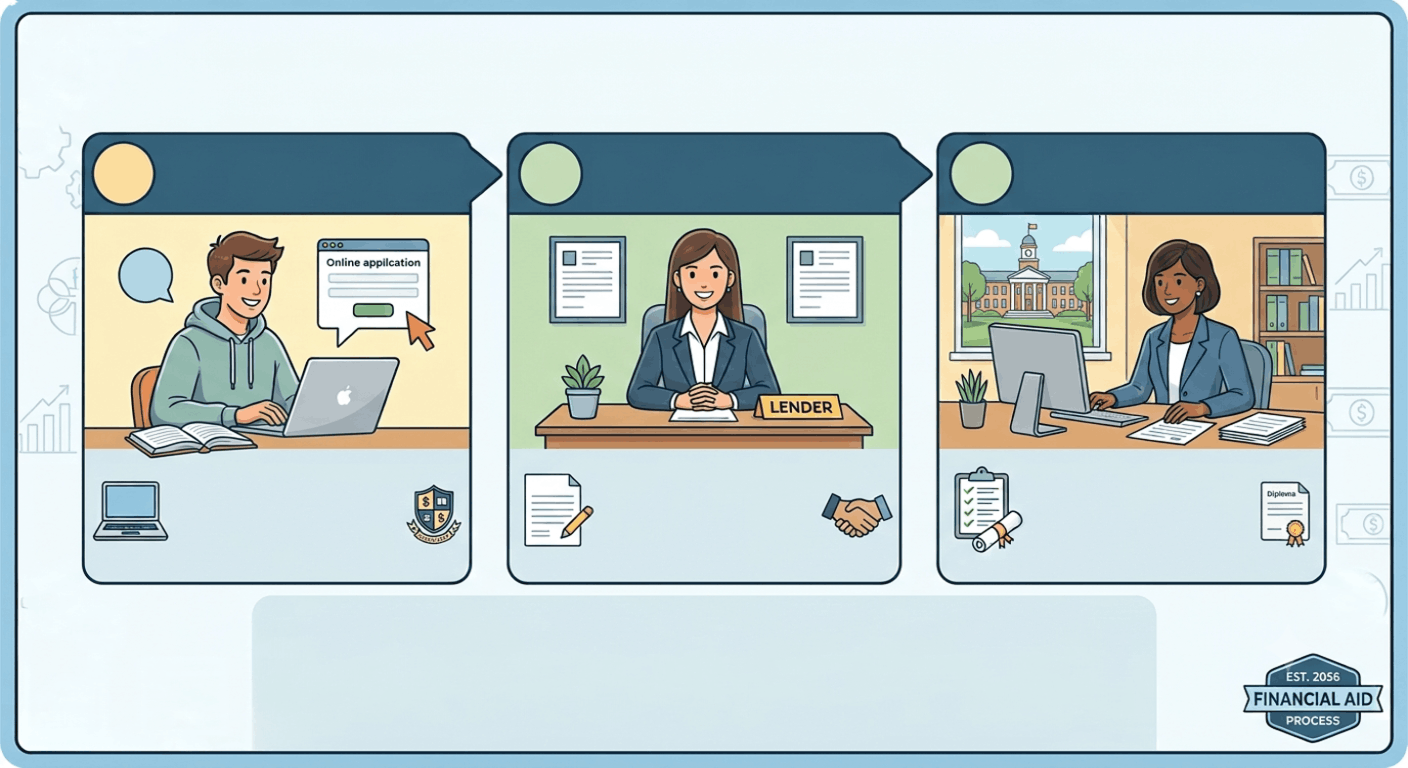
The school certification process follows several verification steps before loan funds are released. Although exact procedures vary slightly between schools and lenders, the overall process is similar for most federal student loans and private student loans. Understanding each step can help students avoid delays and know what to expect after submitting a student loan application.
Submit Your Student Loan Application
The process begins when the student submits a student loan application. Federal borrowers usually complete the FAFSA, while private borrowers apply directly through their chosen lender. The application includes personal information, school details, and the requested loan amount.
Lender Sends Certification Request
After receiving the application, the lender sends a certification request to the student’s college or university. This request asks the school to verify enrollment, attendance costs, financial aid eligibility, and the maximum loan amount the student is permitted to receive.
School Reviews Your Information
The financial aid office reviews the student’s enrollment status, academic program, financial aid package, and Cost of Attendance. The school also checks whether the requested loan amount exceeds the student’s remaining eligibility after accounting for grants, scholarships, and other financial assistance.
School Certifies the Loan
Once all information has been verified, the school certifies the loan and notifies the lender of the approved amount. If the requested amount is higher than the student’s remaining eligibility, the school may certify a lower amount that complies with financial aid regulations.
Loan Approval and Final Review
After receiving the certified loan information, the lender completes a final review of the application. For private student loans, this may include a final credit review before confirming the loan terms and preparing the loan for funding.
Student Loan Disbursement
After the final review is complete, the lender sends the loan funds directly to the school. The institution first applies the money toward tuition, fees, and other eligible charges. If funds remain after these expenses are paid, the school issues the remaining balance to the student according to its refund schedule.
Which Student Loans Require School Certification?
Most student loans require school certification before funds can be disbursed because lenders must verify that the borrower is enrolled in an eligible program and is not borrowing more than the allowable amount. This process is used for both federal and many private education loans to ensure compliance with financial aid regulations and the student’s Cost of Attendance (COA). Although the exact requirements vary by lender, the following loan types commonly require certification.
Federal Student Loans
All Federal Direct Subsidized Loans, Federal Direct Unsubsidized Loans, and other federal education loans require school certification. The school’s financial aid office confirms the student’s enrollment, financial aid eligibility, annual borrowing limits, and Cost of Attendance before the U.S. Department of Education authorizes the loan for disbursement.
Private Student Loans
Most private student loans also require school certification after the lender conditionally approves the application. The school verifies enrollment, educational expenses, and remaining financial aid eligibility before confirming the final loan amount that can be released.
Parent PLUS Loans
Parent PLUS Loans require school certification because they are federal loans borrowed by parents to help pay for a dependent undergraduate student’s education. The school confirms the student’s enrollment and certifies the maximum amount that can be borrowed after considering other financial aid.
Graduate PLUS Loans
Graduate PLUS Loans also require school certification before funds are disbursed. The school verifies that the graduate or professional student is enrolled in an eligible program and confirms the approved borrowing amount based on the student’s remaining educational costs.
Some personal loans that are not specifically designed for education expenses generally do not require school certification, but they also do not offer the borrower protections and education-specific benefits available with certified student loans.
How to Speed Up the School Certification Process
Although the school certification process is handled by both your lender and your college, students can take several steps to reduce unnecessary delays. Completing required documents on time, responding quickly to requests, and ensuring your enrollment information is accurate can help your student loan disbursement move forward more efficiently.
Submit Documents Early
Submitting all required documents as soon as possible gives your lender and financial aid office enough time to review your application before peak processing periods.
- Upload all requested documents without delay.
- Double-check every form for missing information.
- Keep copies of all submitted documents for your records.
Complete FAFSA First
For federal student loans, completing the FAFSA early allows your school to determine your financial aid eligibility before beginning the certification process.
- Submit the FAFSA as soon as it becomes available.
- Correct any FAFSA errors immediately.
- Monitor your FAFSA status until it is fully processed.
Monitor Your Student Portal
Most colleges provide updates through an online student portal where certification requests and financial aid notifications are posted.
- Check your portal regularly for new updates.
- Review any outstanding financial aid requirements.
- Complete pending tasks before published deadlines.
Respond Quickly to Requests
If your lender or school requests additional information, responding promptly can prevent your application from being placed on hold.
- Reply to emails as soon as possible.
- Submit requested documents immediately.
- Answer verification questions accurately.
Confirm Your Enrollment
Your school cannot certify your loan unless your enrollment meets the required eligibility standards for the loan program.
- Register for eligible courses before certification.
- Maintain the required enrollment status.
- Notify the school if your schedule changes.
Contact the Financial Aid Office
If your certification appears delayed, your financial aid office can explain the current status and identify any remaining requirements.
- Ask whether additional documents are needed.
- Confirm that your certification request has been received.
- Request an estimated processing timeline.
School Certification vs Loan Approval
Many students confuse school certification with loan approval, but they are two separate steps in the student loan application process. Loan approval is completed by the lender after reviewing your application and, for private loans, your credit profile. School certification is completed by your college or university to verify your enrollment, Cost of Attendance, and loan eligibility before funds can be released.
| Feature | School Certification | Loan Approval |
| Purpose | Verify student eligibility and educational costs | Determine whether the lender will issue the loan |
| Completed By | College or university financial aid office | Student loan lender |
| When It Happens | Before loan disbursement, after application | After reviewing the loan application |
| What Is Verified | Enrollment, Cost of Attendance, financial aid eligibility, loan amount | Credit history (if applicable), borrower information, lender requirements |
| Outcome | School confirms the approved loan amount | Lender approves or denies the loan application |
Common Mistakes Students Make
Many delays in school certification occur because students overlook simple but important requirements during the student loan application process. Understanding these common mistakes can help you complete certification more quickly and avoid unnecessary problems with your student loan disbursement.
Borrowing before completing the FAFSA is one of the most common mistakes because many federal aid programs require FAFSA information before schools can determine eligibility. Requesting more than your Cost of Attendance (COA) may also cause the school to reduce the certified loan amount or request additional review.
Ignoring emails from your lender or financial aid office can delay certification if additional documents or corrections are required. Missing important deadlines may postpone certification until a later processing cycle, especially during busy enrollment periods.
Entering incorrect personal information, such as an incorrect Social Security Number, student ID, or enrollment details, can prevent the school and lender from matching your records correctly. Another common misunderstanding is assuming that loan approval means money will be available immediately. In reality, most student loans must complete school certification before the lender can release funds to the school.
Final Thoughts
School certification for student loans is a required verification step that confirms your enrollment, Cost of Attendance (COA), and loan eligibility before funds are disbursed. This process helps ensure students borrow only the amount they are eligible to receive while preventing errors and over-borrowing. To avoid unnecessary delays, submit all required documents early, complete the FAFSA as soon as possible, and regularly check for updates from your lender and financial aid office. Staying proactive throughout the certification process can help ensure your student loan disbursement is completed on time.
Frequently Asked Questions
What is school certification for student loans?
School certification for student loans is the process where your college or university verifies your enrollment, Cost of Attendance (COA), and loan eligibility before the lender releases your loan funds. It is required for most federal and many private student loans.
How long does school certification take?
The school certification process usually takes a few business days to about two weeks, depending on your school, lender, and the time of year. Processing may take longer during peak financial aid seasons.
Can a school deny student loan certification?
Yes. A school may refuse or reduce certification if you are not enrolled in an eligible program, request more than your Cost of Attendance, or do not meet the lender’s or school’s eligibility requirements.
What happens after school certification is complete?
After certification, the lender completes any final review and sends the student loan disbursement to your school. The school first applies the funds to tuition and fees before refunding any remaining balance to you.
Can I speed up the school certification process?
Yes. You can help speed up certification by submitting documents early, completing the FAFSA on time, monitoring your student portal, and responding quickly to requests from your lender or financial aid office.